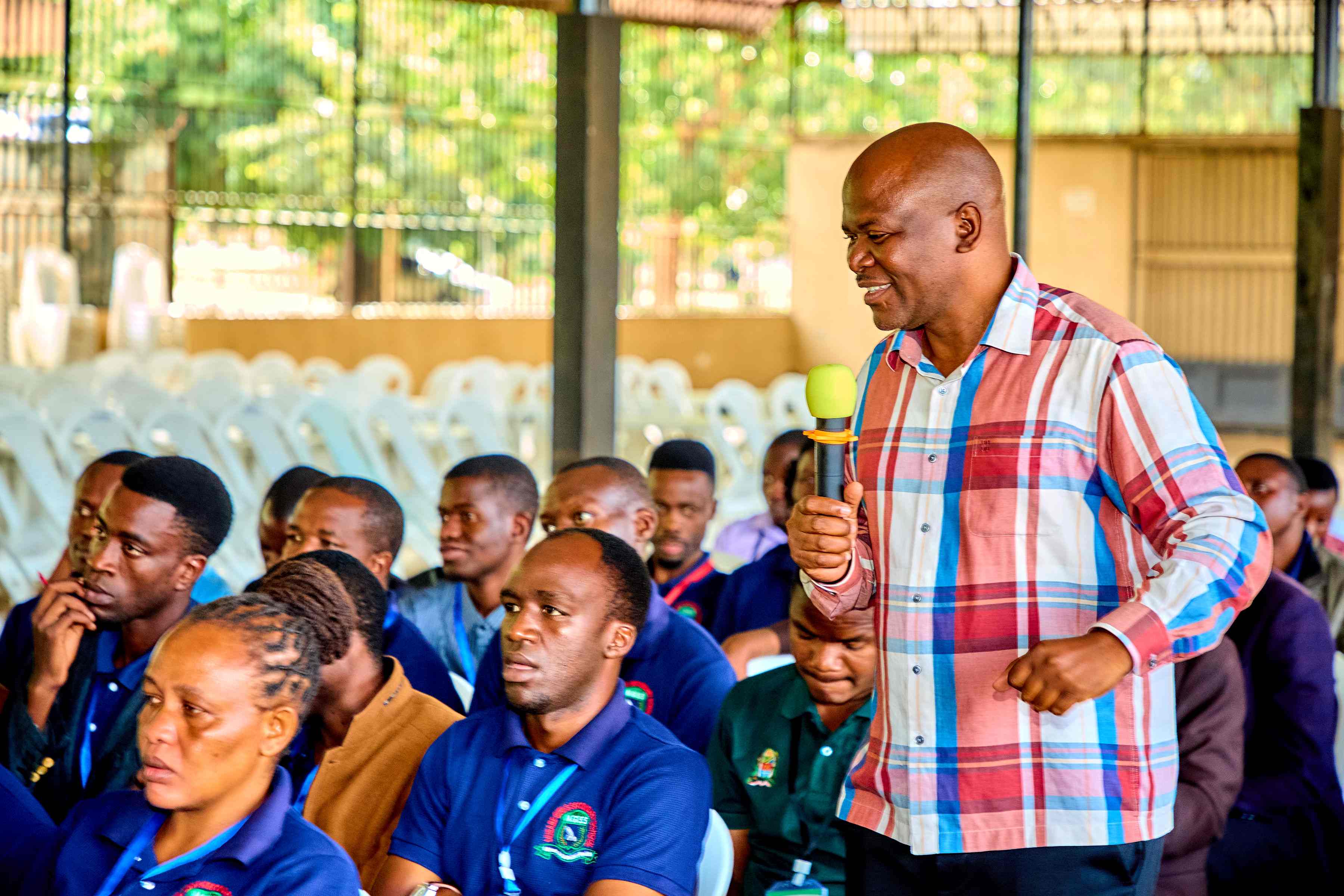
Refreshed and refocused, participants returned for the afternoon's most eye-opening session — a deep dive into the New Tanzania Curriculum and the official Muundo wa Elimu (Structure of Education) that underpins it.
For many teachers in the room, this was the first time they saw the full picture of where their work fits within Tanzania's national education journey — from a child's very first years of life all the way to higher education and the world of work.
The Education Ladder: From Cradle to Career
Tanzania's new curriculum is built on a clear, structured pathway that gives every learner — regardless of their strengths — a route to a productive future.
Elimu ya Malezi na Makuzi (Ages 3–4, 2 Years) — The journey begins before formal school even starts. Early childhood development lays the cognitive and social foundations that everything else builds upon.
Elimu ya Awali — Pre-Primary (Age 5, 1 Year) — The bridge between home and school. This stage prepares young children for structured learning.
Elimu ya Msingi — Primary Education (Ages 6–11, 6 Years) — The backbone of basic education, running from Standard 1 through Standard 6 (D1–D6). This is where literacy, numeracy, and curiosity are formed.
Sekondari Hatua ya Chini — Lower Secondary (Ages 12–15, 4 Years) — At this stage, the curriculum splits into two deliberate pathways:
- Elimu ya Jumla (General Education) — academic track
- Elimu ya Amali (Vocational Education) — practical/skills track, with VETA as a key enabler
This split is one of the most significant reforms in the new curriculum. It recognizes that not every student learns the same way — and that a skilled tradesperson is just as valuable to the nation as a university graduate.
Sekondari Hatua ya Juu — Upper Secondary (Ages 16–17, 2 Years) — For those on the academic path, this stage deepens subject mastery in preparation for higher education.
Elimu ya Amali Sanifu — Standardized Technical Education (Ages 16–18, 3 Years) — The vocational parallel to upper secondary, producing technically skilled graduates ready for the workforce or further technical training.
Higher Education — Two Doors, One Destination:
- Elimu ya Jumla ya Juu (TCU) — General Higher Education, 3+ years, from age 18
- Elimu ya Amali ya Juu (NACTVET) — Technical Higher Education, 3+ years, from age 19
Both roads lead to the same destination: Maisha ya Kazi — a productive working life.